Thursday, May 25, 2023

NEW JAGUARS? MORE THAN A MAYBE by John Crawford

In September 2020, as the global COVID epidemic was rising to its crescendo of chaos, when carmakers faced supply chain impediments never seen before, and were struggling to deliver finished vehicles, an aristocratic, autocratic Frenchman crossed the English Channel and joined Jaguar Land Rover, after being ousted from Renault following the Carlos Ghosn scandal.
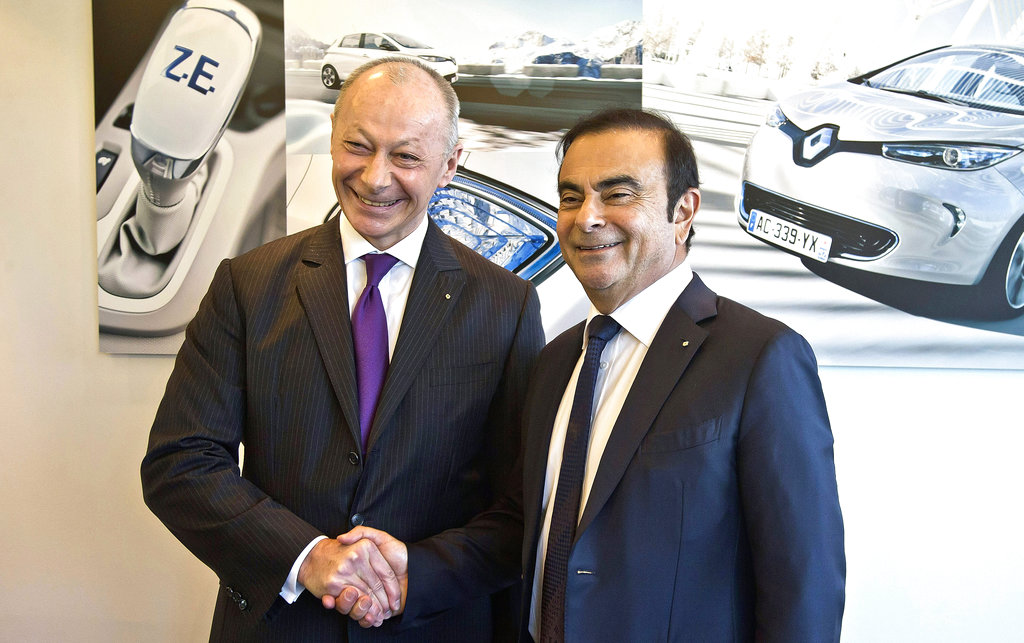
 

Thierry Bolloré has very good executive credentials. He is very much cast in the same mould as Ghosn, his former boss and colleague.


Watch him walk into a room, or striding across the floor of an international motor show and he exudes an air of total self-confidence, pushing away acolytes with the dismissive air of a king fed up with his court.


Initially, quite genial, often your dismissal can occur just after you begin conversation, say 30 seconds or so.

He gives the impression of a man whose brain isn’t big enough to retain his thoughts, so he can’t afford to give up time listening to yours.


Just over a year after moving to Gaydon to take the reins of a carmaker with more problems than you would ever want to know about – from falling revenues, dangerously slim cash flows, desperate need for investment and minus a leader – let alone a vision from the leadership.


Bolloré delivered a program for the marque most failing – Jaguar.


He called the forward-looking proposal ‘Reimagine’, telling the media and the global automotive world, that he would guide Jaguar through probably the most ambitious product developments in the brand’s recent history.


He asked us all to join him in reimagining Jaguar as an entirely different approach for the vehicles which proudly bore ‘The Leaper’.


Actually, I believe from insiders, that during the development of ‘Reimagine’ there was even talk of ditching the marque’s most revered icon.

Sacré bleu!

 A range of new Jaguars, which in design terms would owe nothing to their predecessors, would be built on an entirely new platform and would be fully-electric. Although there was no detail whether they may be sedans, coupes or SUVs, Bolloré made it clear they would not resemble anything that we may previously have perceived as a Jaguar.


Sir William Lyons always said: “Jaguars are a copy of nothing”. So, apparently these new Jaguars will not only be an original take for an old brand, but they will also be positioned at the pointy end of the price scale, closer to Bentley than the current range of cats.


This strongly suggests that the new Jaguars will succeed or fail because not only of how they will look, but also what they promise in terms of both the aesthetic, and their athleticism. Everyone who knows Jaguar’s glorious history has heard the phrase - “Jaguars must look fast, standing still.”


Given the mind-blowing performance of the new era of premium electric vehicles nobody doubts they will deliver smooth, speedy performance, so, again it really comes down to how they will look. The ‘look’ of a Jaguar has always been elemental to the brand’s success. 


Therefore, where do stand on the subject of Jaguar design? Well, after Ian Callum’s dignified retirement, there was Julian Thompson’s departure after a short time holding down the chief designer’s seat. Did they jump, or were they pushed? I suggest the answer was a bit of both. But, more on future design in a moment.


After a bold and impressive start and with sweeping French flourishes and confident gestures from the stage of the ‘Reimagine’ presentation, Bolloré was gone in just two years. What happened?


I believe it was timing, and perhaps (unsurprisingly) personality clashes. Revenues were suffering badly and Bolloré’s ‘Reimagine’ program was ambitious, came with a huge price-tag, and required the risk-averse Indian management to ‘take a punt’. The Tata 'money' team back in Mumbai also would have bristled at Bolloré’s autocratic, insistent and determined push to get his plan approved.


Who will now guide Jaguar through the choppy seas of launching new designs carrying an iconic reminder of the past? Why! It will be none other than Captain Gerry McGovern – the man who is now in complete charge of all things creative on the good ship JLR.


McGovern has proven his credentials too, following a string of incredibly successful SUVs carrying the oval green Land Rover badge – Evoque, Discovery, Defender and Range Rover. He’s a cocky character, totally self-absorbed and quite frankly, a little annoying to talk to or try to interview. His sense of self-belief has to be experienced.


His latest forays into the jungle of the British automotive media at CAR and Autocar have not revealed any details, or even a sly hint at what the new ‘cats’ will look like, but as the man who says he now commands the design ethic of a ‘House of Brands’, he uses phrases which he hopes will resonate with potential Jaguar buyers. McGovern says the new designs will be aspirational, exuberant and, most important, fearless!


Of course! But, I like the way he talks.


Before we go on with analysing whether a plan to ‘Reimagine’ the Jaguar brand will succeed, I’d like to present some design ideas which are a distillation of suggestions from terms McGovern uses; a few more defined words casually dropped by JLR’s new CEO Adrian Mardell; the tidy and symmetrical appearance of the latest models from Land Rover; a couple of tiny hints from some moles – and some good old crystal-balling.


I discussed the thankless task of designing some concepts using thin air as inspiration, with a designer mate I have known since my time as Editor of MODERN MOTOR magazine in the mid 70s. Steve Park* is highly experienced, very successful, has a great commercial eye, down-to-earth common sense, and also a sort of oblique connection to many of the brand names with threads running through this project.


We have to ask, will Jaguars that look like this attract a young, but successful and aspirational group of buyers? Only time will tell, but apparently the plan has been approved.


The continuing commercial success of Range Rover, Defender and Discovery is generating large swathes of cash thanks to an uptick in vehicle deliveries, and according to CEO Mardell, JLR has paid down  £1.5 billion of debt in the last six months, and Mardell has said “Thanks to an average transaction price of £71,000, I believe that confirms our focus on aspiration of our customers”.


In fact the headline finance numbers show that JLR quadrupled its profits in the last quarter of the 2023 financial year compared with a year earlier.


With revenues rolling in, then perhaps now IS the time to splash big cash in Jaguar’s direction. There’s a view shared by many in JLR management ranks that Jaguar was the victim of too little investment; too much caution in design, a lack of ambition to move Jaguar into its own segment – and take a bold gamble. Mind you, this is the same management which was at the tiller when these issues threatened Jaguar’s survival.


What Jaguar needs is a bold leader who shares a vision of exuberant modernism with Gerry McGovern. The current CEO is a bean-counter.

Jaguar doesn't have a leader with Lyons' vision, so McGovern is hope for the future.


McGovern is a man who some say is obsessed with the great luxury brands like Gucci, Hermes and Rolex.


This is not a bad thing if you want Jaguar to be once again considered an aspirational brand.


With so little information seeping out of Gaydon, everyone's had a go at suggesting what the new Jaguar EV may look like with both Drako and Autocar producing fancy concepts.


However, it sounds to me like Gerry McGovern may have tapped into the thinking of many Jaguar brand enthusiasts about the reasons for Jaguar’s success with cars like the XK120, E-Type and Jaguar XJ6. In all these instances Jaguar created its own market niche and under Sir William Lyons (who also obsessively chased aspirational buyers - for example stars like Clark Gable) Jaguar was a ‘brand alone’.


For comparison, in 1968 a Jaguar XJ6 was cheaper than a Bentley. But offered similar attributes of luxury, comfort and performance.


I’m also guilty of expressing this concept and I am trusting Gerry McGovern to give Jaguar the tools it needs to not only survive, but prosper, and allow its new buyers to feel a sense of pride, accomplishment and celebration.


For that, we have to put our hopes in Gerry McGovern’s ‘exuberant modernism’. I am more than happy to invest my emotional capital in ‘Reimagining’ Jaguar as a standout in JLR’s ‘House of Brands’ and regain its rightful place as one of Britain’s most respected marques.


After all, this could be Jaguar's last gasp!


JOHN CRAWFORD


*Steve Park - Designer


Steve’s been in the automotive design world for over 35 years and his background covers a wide range of experiences - from clay modeller to senior designer.


He started with Ford Australia in 1977, and during his time has had a significant influence and impact on the Falcon range of cars. He was lead designer for the AU Falcon (top).


The last Falcon he worked on was, the LAST the FG Falcon (Bottom).


Also, Steve has had senior design roles through the 80s and 90's at Ford of Europe; Dunton design in the UK; Ghia studios in Turin; a stint with The Ford Design studio alongside Mazda in Hiroshima; Exterior design in Köln, and a long-term posting with Ford North America.


Currently Steve is chief designer with HO [homologated option] based in Melbourne.

HONDA'S BOMBSHELL DECISION! by John Crawford

The big excitement in Formula One this week is the shock announcement that Honda will officially re-join the Formula One grid as an official engine supplier when the new rules are introduced in 2026.

The real surprise is that Honda engines will not be powering 2023's all-conquering Red Bull F1 team. In a huge development for the team, it will be Aston Martin F1 which will enjoy the benefits of all of Honda's vast F1 experience, plus all the stuff it has learned from the seasons it has partnered with Red Bull.

Honda has somewhat of a chequered history with Formula One. 

The company first entered F1 in 1964, just four years after it produced its first road car. The company further startled the established F1 cadre by producing not only the engine, but also the chassis. The car was called the RA271, and after just one year of competition the RA272 (below) carried American Ritchie Ginther to victory in the 1965 Mexican GP.

Since then, Honda has been in and out of both direct competition as a full factory team, and as an engine supplier. 

In 2019 Honda signed with Red Bull to provide engines, and the team scored an important first victory at the 2019 Austrian GP.

In 2021 Honda withdrew, but agreed to provide assistance to Red Bull which manufactured the Honda engines under licence - an arrangement which was to run until 2025.

This is a major coup for the revitalised Aston Martin team, which has scored four podiums in the first five races for 2023.

It also follows extensive 'poaching' of some highly-experienced engineering, design and logistical management from some of the top teams - many of whom defected from Red Bull.

Roll on 2026 - I'm certain there's more big changes to come!

JOHN CRAWFORD

Sunday, April 30, 2023

ANOTHER EV TORTURE TEST - by John Crawford

If you think electric cars are doing your bit for the environment, then please read this:


So much for electric cars! This cautionary tale comes from a NZ mechanic!


He had to work on a Nissan Leaf a week ago. A near-new NZD$30,000 car with a failed battery.


No one in town would work on it, and as the mechanic had completed a course on electric cars, the service rights were awarded to him by Nissan NZ. 


He arranged for the tutor from the Dunedin Polytech to help.


One failed module in the battery was shorting out to the case. A second-hand module is able to be fitted, but it needs to be in exactly the same condition as the remaining ones (85.2%), or the entire battery fails to perform.

So, the owner was left with the option of a second-hand battery out of a wreck that has no guarantee at $14,000, or an entire,  new battery pack at $20,000.


Then there is the problem of disposing of the old battery, or part of a battery. Nothing is available in NZ, and no-one is willing to transport a damaged battery. Specialist transport is available, and the cost to have one module (out of 24) transported to Australia and disposed of is around $5,000.


On top of all that, the tutor went through some of the legislation around EVs with the mechanic. If an EV is involved in a crash, and people are trapped inside, the fire brigade must isolate the battery before they can cut into the car, to rescue the occupants.


In a Leaf, the isolation plug is under a bolted cover on the floor between the front and back seats.


Once the cover is removed, the worker must have 3 pairs of gloves, required by law. They are cotton, rubber, and leather. Then with hands resembling lamb roasts, they can try and disconnect the 3-stage electrical plug. Then they can cut into the car. 


So, the problem with crashing any EV is that if you are trapped, you're dead, as it is probably impossible to remove victims. 


Also, it’s practically impossible to extinguish a battery fire. Water makes lithium burn. They forgot to tell you this part! As I wrote previously on this subject, the only way to guarantee the fire is out, is to drop the entire car into something like a shipping container filled with water, or dunk it in a nearby swimming pool! Not!


In a separate discussion between the mechanic and a resident of the retirement village where the Leaf owner lives, it appears that if 20% of the residents in the village had electric cars and charged them every night, the power supply would crash, as it is not designed to handle that sort of load, especially when air conditioners are being used to heat us in winter and cool us down in summer.


And who pays for upgrading the electrical supply? The owners of the units at the residential village of course!


Still think Electric Cars are the way to go? Think again! Oh, and would you mind passing this Post on to the Australian PM Anthony Albanese, Chris Bowen (the Chief Numpty) and your local member of federal parliament – because there’s no doubt they are ignorant of these details.


JOHN CRAWFORD

Wednesday, April 19, 2023

IS THERE AN MG ROADSTER IN YOUR FUTURE? by John Crawford

A while back, to keep the MG traditionalists quiet, MG revealed a concept car shaped like a two-seat roadster, promising a return to wind-in-the-face motoring in a car with an octagonal badge.

Just about everyone said: “Yeah, yeah, pull the  other leg, it rings a bell.” However, after looking at a filing notice from China, it appears MG just may be about to produce a production version of the concept car, named the ‘CYBERSTER’. What a stupid name.


Sometimes, legal filings with the Chinese Ministry of Industry and Information on planned products are more BS than Blueprints for the future. However, there are people with no other avenue of entertainment in their lives who joyfully trawl through mountains of legal filings to come up with something new. Really? They need to get a life.


However, on this occasion let’s congratulate whomever managed to leak photos and details of MG’s planned surprise.


I last drove the British-built MG-F in 1998, and I really enjoyed the car, more so than owners who had to deal with multiple warranty issues.

The Stephen Harper-designed roadster continued in production until 2005 – that leaves a long gap between roadsters!


Here then is a, supposedly, ‘production-ready’ MG roadster, and some details of the propulsion system, and ‘whoa’ no steering wheel – just a ‘yoke’ as seen in aircraft and F1 cars.


Dimensions first: 4535mm long, 1913mm wide, 1329mm tall – on a wheelbase of 2690mm.


It will have a choice of a red or black cloth roof, two seats and a kerb weight of around 1900kg. For relevance, the MG’s wheelbase is 215mm longer than a Porsche Boxster, and it weighs 700kg more than a Mazda MX-5.


It's an EV - of course! Power will come from a single-motor-rear-drive, with 213kW of power, but there’ll be an optional dual-motor-AWD version with front axle output being 150kW, and rear axle output of 250kW. Which probably means real sports-car performance, but naturally pricing is unknown.


However, quotes from MG’s UK and Australian marketing managers say it will be here in 2024 and keenly-priced.


Can you hold your breath that long?


JOHN CRAWFORD


Sunday, April 16, 2023

FORD RETURNS TO F1! REMEMBER LAST TIME, BILL? by John Crawford


It was in Frankfurt in October 1999, at the Motor Show, which in German is known by the acronym IAA, that I wandered across from the Bentley stand to meet my good friend Nick Scheele, then about to become President of Ford of Europe.


Previously I had worked closely with Nick, when I was PR Vice President of Public Relations at Jaguar Cars North America, and I received the usual warm welcome from the cheery and friendly former Jaguar Chairman. 


Ford Motor Company was celebrating its June 1999 announcement that it had acquired the Stewart F1 team from its founder, Jackie Stewart, and would be renaming it the Jaguar F1 team.


We snuck off to the suite reserved for the senior executive’s use, for a welcome cup of tea and a chat about our time together with Jaguar. This naturally headed in the direction of Ford’s decision to rename the F1 team under the Jaguar banner.


Nick was very aware that having worked with the Jaguar brand since 1977, I was not only a dedicated guardian of the Jaguar brand image, but also a historian, when it came to Jaguar’s great history and tradition, and yes, the myths and legends.


The ‘myths and legends’ were a powerful tool when talking about the marque’s proud background as a British brand started by the visionary Sir William Lyons, which had not only captured the attention of British enthusiasts, but also most important, the vast American market.


After pleasantries, I said to Nick: “What were you guys thinking? Jaguar has NEVER had any association with Formula One – its motor sport history is all about sports car racing.”


Jac Nasser (L), with Wolfgang Reitzle
Nick sighed and said: “Aah, it was Jac’s idea, pushed really hard by Reitzle.” He was referring to Ford CEO, and also a good friend of mine, Australian Jac Nasser, and Wolfgang Reitzle, the ex-BMW director who was head of Ford’s Premier Automotive Group.


I replied: “Well there’s two guys, truly at the top of the executive tree, who know nothing about Jaguar’s history, nor the foolishness of linking Jaguar with Formula One, this will end in tears.” And, indeed it did.


First, the wily Scot, Jackie Stewart, extracted the absolute maximum price from Ford when it acquired the whole team, plus facilities.


Then second, Ford stumbled (from the start) through its entire ownership of the ‘Jaguar’ F1 team with a revolving door of team management – hardly any of whom knew anything about competing in Formula One, and none of them knew how to manage an ‘octopus’ – which is what F1 begins to look like to newbies. 


It's first Team Chief was much-respected engineer, Neil Ressler, who knew zero about managing a racing team, nor the labyrinthe layers of F1 politics.


At one point Wolfgang Reitzle hired Niki Lauda as Team Director, but it didn’t take the acerbic Austrian long to realise that the Ford-installed team management had just one law –‘You do it our way, or not at all.’


I think that’s brave talk, when you’re dealing with a former world champion who had decades of real experience.


Monaco 1976 - Lauda shows a clean pair of slicks to the rest of the field

Formula One is not kind to those who lack knowledge of the sport; knowledge of how it operates; knowledge of managing the disparate divisions of an F1 team, and also just the basic lack of appreciation that they are wilfully spending zillions of dollars chasing a somewhat imaginary goal.


The team owner and its sponsors must exhibit unwavering faith that the project will succeed. However, faith doesn’t pay the bills.


Yes - obviously to win in F1 you need big, big budgets and when Jaguar team management reports back to the Ford Board in Dearborn, that this year’s budget will have to be increased by XX millions, the conservative and somewhat penny-wise management qualities of ‘Good Old Boys’ in the centre of the USA simply cannot rationalize the dollars spent, with a lack of results which will truly benefit the company’s bottom line.


I can tell you, there would have been many times when Nasser went to the Board to try and explain that F1 is a money-hungry animal that just keeps needing to be fed.


The Board members would have been quite justified in saying: “Why? What are we really getting out of this project?”


By any measure the Jaguar F1 team was a failure, typical of projects that have not been seriously thought through, difficulties honestly assessed, an understanding of the challenges ahead for a ‘newbie’ team of managers, complicated by formidable Formula One politics, general skulduggery, and many examples of skirting the rules to gain advantage. This last condition is one which would never have occurred to the somewhat pious members of the Board of the Ford Motor Company.


However, after a ‘dud’ showing the Jaguar team was sold to Red Bull on November 15, 2004 – that’s it, it’s all over now!


So, what’s different this time? If you read the press releases from Ford and the quotes from its CEO Jim Farley, not a lot. Ford wants what it wanted with the Jaguar F1 team – image, credibility, status, market presence, and this time, a focus on its technologies, oh, and of course to sell more cars.


I’m afraid Formula One’s ‘business model’ just doesn’t align with those objectives. The teams have only one destination – dominate races and the podium – and make sure there’s enough cash to pay the big salaries and huge operating costs. That’s it. Only the very smartest owners/sponsors can successfully use Formula One as a genuine marketing tool.


I don’t rank the giant Ford Motor Company among that tiny circle. Ironically, the company Ford sold its Jaguar F1 team to, Red Bull, has proved very adept at using its F1 team along with a number of ‘extreme sports’ to market its energy drink.


Think back to the glory days of the dominant, race-winning Cosworth DFV engine – the 60s and beyond. Every team which was chasing success simply had to use the DFV – but out in the public arena who knew that the Cosworth DFV was a (very successful) joint program between Cosworth and Ford?


Even then, motor racing success with its dominant engine never morphed into a successful marketing tool for Ford, despite the millions involved.


The project was inspired and managed by a small group of diehard engineers who really knew their stuff, but you could have called that whole Ford racing division a ‘skunk works’.


Imagine a Pommy Ford salesman saying to a Cortina or Escort buyer, “You know this car comes from the same company as the one that makes the most successful F1 engine.” What?


Now, when it comes to ‘American’ motor sport like Nascar, that’s a whole other ball game.


But, Formula One? Never mind the success of Netflix’s “Drive to Survive” series and how it’s awakened American audiences to the thrills of Formula One. Translating that into public imagery which boosts the status and integrity of the Ford Motor Company, and sells more cars is a long shot.


Funnily enough, General Motors’ program to gain entry to Formula One via the Andretti family and its Cadillac division makes slightly more sense.


Cadillac has been dominating American sports car racing for a long while, and it will be the Andretti name dragging Cadillac into the spotlight, rather than the other way around.


I don’t mean to belittle the auspicious and impressive talents of Ford’s engineers, and their ability to forge a path into a challenging new field of technology, using F1 as its ‘vehicle’, but my guess is that even if it is Ford’s engine (and associated technology) that ensures Red Bull keeps dominating Formula One, you can bet that the name on everyone’s lips is more likely to be Red Bull than Ford.


Cast your mind back to when Henry Ford II became so angry about Ferrari’s success in producing, selling and winning in the sports car sector, that he agreed to spend ‘whatever’ to beat Ferrari in the 24 Hours of Le Mans. 


For Henry Ford it was ‘personal’. He hated il Commendatore, because Enzo knocked back an offer by Ford to buy the famous Italian company, and didn’t even personally reply to Ford’s offer.


It's estimated to have cost Ford Motor Company around USD$25 million on the GT40 program over the course of four years – 1964-67. Ford did beat Ferrari, but the only thing that was satisfied was Henry Ford’s ego. Did it sell more Fords? Hard to say, but I suspect the answer is no, certainly not 25 million bucks worth!


My advice to Ford is, go ahead with the Red Bull deal, but temper your expectations. On a personal note, I’d also advise Ford to spend up big, really big, on a competent communications program, run by people who know and understand the F1 PR machine, to ensure it extracts every cent’s worth of value represented in the Ford-Red Bull joint venture.


And that it positively impacts Ford’s bottom line.


JOHN CRAWFORD    

Tuesday, April 11, 2023

MIRROR, MIRROR, ETC, ETC..... by John Crawford

The 2023 Formula One technical specifications included a small change you may not have noticed – all the cars now have larger rear-view mirrors this year. Why is that important?


All the better to see you with!


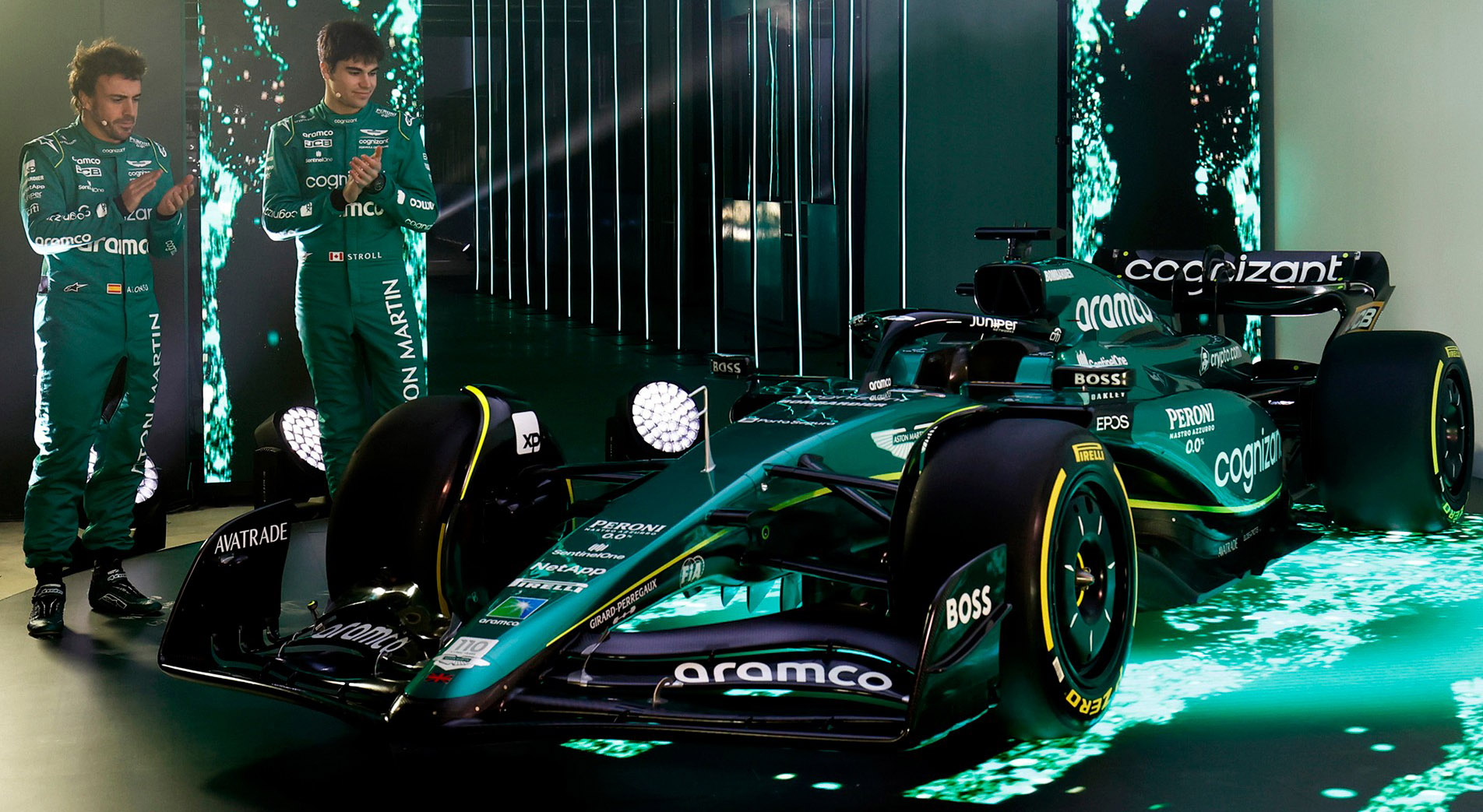
Because now drivers can more clearly see Aston Martin F1’s AMR23 filling the mirrors, resulting in three podiums in the first three Grands Prix of 2023.


The performance of the 2023 car, especially in the hands of double world champion Fernando Alonso, has dominated paddock chat about the Aston Martin team’s performance.


This is another one of those ‘overnight successes’ we often read about – only to find the outcomes have been years in the making. And, in Aston Martin’s case, not so many years. 


The changes, since Aston Martin Chairman Lawrence Stroll acquired the former Force India team in July 2018, have been coming thick and fast. However, rather than being purely engineering-driven, it’s a story of the ‘people’ AMR has hired which reveal the reasons for the improved 2023 performance.


Stroll is clearly a very determined man, and having invested £90 million in the former Force India Formula One team, he’s very keen to see a worthwhile ROI. This is in addition to his £190 million buyout of the Aston Martin car company in early 2020.


Then there was a huge investment in the new, huge, Aston Martin F1 Campus at Silverstone - which includes a wind tunnel.


Yes, they are all financed with leveraged borrowings, saddling both the car company and the F1 team with considerable debt, which has to be serviced, but with a personal net worth of USD$3.6 billion, impressive business savvy and a significant track record building companies and brands, I think there are probably many more lenders willing to provide funds to Stroll, as opposed to the previous Aston Martin Chairman, the hapless Andy Palmer.


Amazingly, when Force India went into administration, almost nobody left the team. I think the apparent loyalty to the team, and each other was quite inspiring. This meant Aston Martin managed to retain many key people who have proved invaluable to rebuilding financially-challenged Force India.


There are now more than 700 people populating AMR F1’s new Silverstone campus, but the strengths of the team today are almost purely related to the individual qualities of the key people Stroll has added to the technical side of the race team.


The path to the team’s current ‘overnight success’ has been turbulent at times, but also clear evidence that a well-structured business enterprise, managed on stable and well-structured principles is more likely to succeed.


Now, to step back in time. In 2010 I was commissioned to write a major feature for the Bahrain-published business magazine, TRENDS, about two key Indian businessmen with connections to cars. Sir Ratan Tata was an obvious choice, after acquiring both Jaguar and Land Rover from Ford.


The second target of the feature was Vijay Mallya, the son of the founder of India’s UB Group – India’s largest liquor, spirits and drinks business – who had acquired the former Midland F1 team from Netherlands-based Spyker Cars for USD$109 million.


In my TRENDS story I suggested these two businessmen were probably India’s new ‘commercial princes’, but whilst Tata’s business credentials were never in doubt, Mallya was another story. He inherited his father’s large estate at just 27 years of age, with little experience running huge enterprises, which in addition to the drinks business, included a large pharmaceuticals division and a number of smaller enterprises.


Quite frankly, I was not surprised that over the years between 2007 and 2020, Mallya managed to piss away his father’s enormous legacy, and for a while was being pursued all over the globe by Indian police to stand trial for fraud, after the collapse of his three biggest investments – Kingfisher Airlines, Kingfisher Beer, and the Royal Challengers Bangalore cricket team, for which he paid an eye-watering USD$112 million.


However, this sad tale of rapid wealth depletion sits in complete contrast to Lawrence Stroll, and his smart moves both at Aston Martin, and the F1 team. He is driven, fiercely-determined, decisive, a highly self-confident manager with an aggressive outlook. I think he’s unlikely to reference the Mallya playbook in his management of the F1 team, because he has handed it to a very impressive manager.


So, now to AMR F1’s key hires which took place from halfway through 2021, to the present day. First and foremost the team’s new CEO Martin Whitmarsh (actually Chairman of Aston Martin Group Performance Technologies), who comes with 25 years F1 experience with McLaren, having guided that team to more than 100 GP wins.


Lance Stroll, Martin Whitmarsh, Lawrence Stroll

Whilst Stroll oversaw a number of new hires, Whitmarsh was urged to continue the  just ‘go and get the very best guys’ formula in order to build up AMR’s key strengths.


Given those very big talents and skill levels are concentrated in a group of very few individuals, Whitmarsh went ‘poaching’.


Beginning in June 2021, AMR F1 appointed Luca Furbatto (from Alfa Romeo) as Engineering Director. He was followed by the announcement that Dan Fallows (Red Bull’s leading aerodynamicist) will take on the role of Technical Director. This comes after the then Technical Director, Andrew Green, was promoted to Chief Technical Officer.


Andrew Alessi, Red Bull’s Chief Designer will move to AMR F1, as Head of Technical Operations. In addition to this talented troop, AMR F1 also lured Eric Blandin away from Mercedes-AMG. Frenchman, Blandin, also worked at the Fondmetal wind tunnel, before working on aerodynamics for the former Jaguar F1 team. Also, he spent a short period at Ferrari, also working in the field of aerodynamics.


Clockwise from top left - Mike Krack, Andrew Green, Eric Blandin, Dan Fallows, Luca Furbatto, Andrew Alessi
Following the continuation of the ‘overnight success’ theme, it seems all of these impressive appointments have settled in quickly, and the word from Silverstone is that the additions have brought new confidence and ambition within the existing team, which is evidenced by AMR F1’s much improved performance toward the end of the 2022 season.
 

Powertrain aside, because AMR F1 uses a Mercedes-AMG ‘customer engine’, it is clear that the input of new skills are bringing outstanding results in the area of chassis tuning and aerodynamics.


At the same time, I cannot dismiss the enormous benefit of bringing Fernando Alonso on board. I’ve met him a couple of times, and when I was asked what more Alonso could contribute, compared to multiple world champion Sebastian Vettel (2010, 2011, 2012, 2013), my simple answer is a mix of personality and communication skills. Vettel is a German, and my experience, watching him at Red Bull, is that whilst he has amassed vast experience, and F1 trophies, he is simply not as communicative about the car as Alonso will be.


Alonso is a typical Spaniard, warm, friendly, affable and very willing to contribute in a voluble and valuable manner. 

Compared to the quiet German, Fernando will bring not only his F1 experience to bear, but also his unique views resulting from his Indy car starts.


With him behind the wheel, the AMR23 has consistently cut the gap to the team’s rivals. In Bahrain, Alonso was 0.6s off pole. In Saudi, that was down to 0.5s. In Australia, he shaved another tenth off to 0.4s.


It’s interesting also to look at the differences in the track surface of the Bahrain, Jeddah and Australian circuits. The AMR23 performed strongly in Bahrain, on the desert track’s cheesegrater surface where traction and power are important, and then in Saudi Arabia – home to the world’s fastest street circuit – and Australia, a semi-permanent track where conditions have been the coolest they’ve been all season.


The latter two circuits have a plethora of high-speed corners – and the AMR23 looked like it was on rails as it glided through them. Baku, the next round offers up yet another variation in circuits.

Team chief Mike Krack (left) says they are constantly working on small changes, but they will be introduced when they are ready, not just in one big package. The team strategy has been to clearly understand the ‘base’ car, before building on the data the first three rounds have produced. He is confident that by the fourth part of the season they will have produced a car which can finish ahead of teams like Mercedes-AMG and Ferrari.

However, it shouldn’t be forgotten that these are impressive rivals, and they won’t be standing still.


Krack also directly pointed to the level of ambition and energy within the team. “We have a hard time getting people to home,” he said.


So, does this mean we will see Aston Martin move into the serious point-scoring positions? My take is, you bet! Mercedes AMG, McLaren and a few of the other teams do not seem to have uncovered the magic secrets of combining their experience and strengths with the 2023 regulations – whereas, I think Aston Martin is off to a cracking start.


Alonso is keen, wants to win, and I’m sure his presence in the team will fire up Lance Stroll – who I’m told by insiders was a bit intimidated by Vettel – I think Stroll junior will find the new partnership much more productive, inspiring and valuable to the team.


That’s why the AMR23 is filling the mirrors.


JOHN CRAWFORD


Sunday, April 2, 2023

AGP WEEKEND DELIVERS RIPPER RESULT FOR RISING AUSSIES by John Crawford

Anyone who regularly travels to Melbourne almost always packs for four seasons, because the weather is so changeable. But for AGP weekend the weather was at its best, and two young rising Australian racers enjoyed results one can only dream about.


In the supporting Supercars race 20-year-old Brock Feeney claimed victory in the final round prior to the Grand Prix, which is clear evidence for the confidence shown in him by his Triple 8 team which fields his Chevrolet Camaro.


My good friend Paul Gover alerted me to Brock’s potential early on, and I wrote about his entry to the sport, and the high hopes held for his progress. I think winning the Supercars race on AGP weekend is simply bloody marvellous for this young, talented, but unassuming young man.


In the AGP, the day was full of chaos, mayhem, three red flags and eight cars which DNF’d. Nonetheless the World Champion claimed his first victory at Albert Park, but of course the interest of Aussie fans were all focussed on young Oscar Piastri in his first hometown GP.


The McLaren team has failed to produce competitive cars in 2022 and so far in 2023, but Oscar kept his cool and even starting from a lowly 16th place managed to steer clear of the chaos, and produced a drive one would expect from a highly-experienced and mature F1 regular.


To come home in 8th position, in the points, at his first AGP (and only his third F1 race) is a fantastic result, and no-one should have any doubts about his potential.


Well done Brock and Oscar – you did us proud. Thanks.


JOHN CRAWFORD