Friday, November 25, 2022

BOLLORÉ'S BOMBSHELL & YET ANOTHER THREAT TO JAGUAR by John Crawford

Thierry Bolloré’s decision to resign after only two years in the top job is a devastating blow to Jaguar Land Rover, and one I fear that could significantly jeopardise Jaguar’s survival.


Jaguar has clung on and survived so many dramatic threats since Sir William Lyons retired it will fill business trends analyses for years. 


That survival story has been written, and re-written many times, and I have been witness to it all.


JLR is sitting on a precipice which could collapse beneath it, because all the major support systems car manufacturers depend on are slipping out of the company’s grasp – and whether Bolloré was the right man for the job, or not, matters little now.


In this post I will be confining my comments to Jaguar’s future.


Once the interim CEO, Adrian Mardell, who is also JLR’s CFO, gets into the CEO’s chair he will have to make decisions fast. The problem is that in the car industry it’s very hard to activate anything ‘immediately’, because there is a huge time lag between the idea and the execution. As you can imagine, there is no such thing in the car industry as things ‘happening overnight’ – that is, except firings, resignations and appointments.


So before delving into JLR’s myriad problems, let’s look at this resignation. First, let’s look at Thierry Bolloré. The recruitment process to replace the previous CEO Sir Ralf Speth, took six months, and many in the car industry were very surprised when Bolloré was appointed – given that after serving only nine months as CEO of Renault, he was unceremoniously dumped. 


There are all sorts of reasons given, but one thing is clear, he is a very ‘prickly’ character. His brain is as sharp as a tack, and his reactions are just as sharp.


The best advice is don’t get on his bad side. He is not known for any examples of ‘charm offensives’. He is brusque (to the point of appearing rude); doesn’t suffer fools gladly, and will not tolerate poor performance. I know this, because I have met him, twice, at the Geneva Salon. I have spoken with him, and watched him in action  at press conferences.


Thierry is very much cast in the ‘Ghosn Mould’ and is all about ‘getting things done’.


And, herein I think lays part of the answer for his truncated tenure at JLR. His manner has apparently upset both the Brits, and the Indians.


In addition, his ‘Reimagine’ plan was simply too ambitious for a car maker not only suffering from stalled sales, but also, his ‘Reimagine’ project caused major bust-ups with suppliers whom he was asking to make big investments to support the new plans.


The same suppliers to JLR are also suffering from parts shortages and lack of chips – just like all motor industry suppliers. However, it would appear many other luxury car companies (who also depend on chips for their expensive options) have been handling the chip crisis much more effectively.


It appears to me that there are currently too many loose ends within JLR that are not getting the attention they need. Bolloré may be a detail man when it comes to laying blame, but he is certainly not a man to get his hands dirty sweating the details of his plans – that’s for other people to do, and they had better do it right!


If the picture I have created of Thierry Bolloré reveals a ‘difficult man’ then I think I’ve got it right. He wants to achieve great things for JLR, but the trouble is there are many tiny elements not working out right; many pesky matters, like trying to deal with falling sales; a lack of attention to the ‘vision for the brands’, and lack of revenue to support investments and big changes. 


Right now, there is so much to be done, and JLR doesn’t have a visionary CEO, nor the substance in the company to deliver any of the changes required for survival.


So, yes, I think there’s a very big possibility that JLR (especially Jaguar) will fail – and be ripe for picking it up at the right price – because Tata Group simply doesn’t have the available cash to save its British Baby. Although my mole in China tells me Tata has knocked back an offer from China's Geely.


Let’s look at some of the numbers which make me feel like this challenge is hopeless. 


In his first few months Bolloré cancelled two BIG vehicle programs – the all-electric XJ large saloon, and the J-Pace EV SUV. They were signed off and ready to go into production. The asset and cash write-down from the cancellation is said to have cost JLR £1.5 billion!


That also meant that with no new models in the production pipeline, the Castle Bromwich plant would close, awaiting whatever new models came along with the ‘Reimagine’ projects!


More numbers. JLR is still losing money, with pre-tax losses for six consecutive quarters, whilst competitors were posting profits. 


The latest results for the July to September quarter (2022) reveal a £178 million loss, which adds up to a mind-blowing total for this YTD an eye-watering £697 million!


JLR says it has a backlog of 200,000 orders it cannot fulfill – but unfulfilled orders don’t pay the bills, until the customers get their cars.


Sales of the Jaguar brand were at 17,340 units in the second quarter (2022) as against 19,248 units in the year-ago period, down 9.9 per cent.  Land Rover division sales are doing better, thanks to the new Range Rover, and continued sales success of the new Defender.

But, JLR has not made a profit since 2018, despite bold plans to boost production to more than one million vehicles a year (*more on this later), in order to challenge the German Big Three.


The plan, which was introduced by Ralf Speth, would cost £25 billion - and increase vehicle production lines from seven to fourteen, boosting the workforce to more than 40,000! The plan expanded JLR too far, too fast - and the headcount grew exponentially, so when the downturn inevitably came Jaguar had a massive overhead to battle with.


Vehicle output was boosted significantly in the UK, India, Slovakia and Brazil, but the expected sales growth never materialized, plateauing at 614,309 in 2018, which resulted in turnover of £25 billion, and profits of £1.5 billion. Those were the last of the ‘Good Old Days’.


What followed was a sharper downturn in sales, investment write-offs, and thousands of job losses. All of which leaves the mood within JLR as extremely gloomy – albeit probably, frightening!


I suspect the Tata management, struggling to deal with the mess that Speth left behind, just lost interest in the ‘grand REIMAGINE plan’ and that could explain Bolloré's decision to leave ‘for personal reasons’. Sorry, mate. It’s not going to work!


However, there appears to be another factor deeply ingrained in some of Bolloré’s thinking. Insiders tell me that designer (sorry, Chief Creative Officer) Gerry McGovern has spent a huge amount of time and effort attempting to ingratiate himself with Bolloré.


Why? McGovern, whose ego runs a close second to people like Wolfgang Reitzle, wants to ‘show’ former Jaguar Design Directors, Ian Callum and the late Geoff Lawson, just ‘how’ a Jaguar should be designed!


This ego-driven approach to product decisions by McGovern could be seen, in step with Bolloré’s radical plans, to be the pivot which could probably spell the end of Jaguar.


Now, after devoting almost 20 years of my career to helping to sustain the Jaguar brand, let me put forward some personal views. They may not save the company, but I think they’re important to consider.


PERSONAL VIEWPOINT


When Sir William Lyons started the ‘real’ Jaguar company (after the initial branding as SS) it competed with a couple of ultra-luxury brands – Rolls-Royce and Bentley – but given Lyons' tiny budgets and his tight-fisted control over expenditures and investment, Jaguar was a niche, luxury player.


Under Lyons’ leadership the cars boasted exceptionally-sporty performance and handling, wood, leather, a confident stance in the market and an image of :“You mean I get ALL THIS, for only £££ !


Jaguars were seen as a ‘luxury bargain’, with outstanding performance and handling. However, even in those heady days, as the company established its reputation, it was only selling to a tiny niche of the car market in Britain, and a few export markets. It simply wasn’t a BIG company – even though its reputation was becoming legendary.


Jaguars may have been cheaper than Bentley and Rolls-Royce’s finest, but they certainly were not mass-market cars, by any stretch of the imagination. So, however brilliant the reputation it was still a small company making cars for a small, but loyal following.


Here’s where I come in. I began working with Jaguar in Australia, as PR Manager, in 1977, after almost ten years as a freelance motoring journalist and editor of MODERN MOTOR magazine, soaking up all I could about brands, their performance, their sales and their reputations.


I always thought Jaguars were ‘pretty special’ and almost an ‘undiscovered gem’ and as I began to frame my PR messages and communications I focussed very strongly on the ‘exclusive’ nature of Jaguar ownership. My messages were created around an idea: “No, you may not be able to afford something more expensive, but just look at the Jaguar proposition and what it delivers.”


I instinctively knew we were dealing with a small niche, and so long as those owners were satisfied, we had thousands of loyal owners who would happily return; plus, their positive word of mouth slowly boosted sales. So, my PR messages then began to focus on the elements of success the brand was proud of – it’s motor racing victories (including Le Mans); its great road test stories written by journalists who loved the brand because of the performance-value for money equation, and promotion of celebrities who chose the brand – like Clark Gable, et al. All of which added to the emotional appeal of the Jaguar brand.


So, after revealing all this personal aggrandisement, what have I got to say about the immediate past, and current situation?


Jaguar was very successful as a niche player, with cars which were outstanding value for money, but they were still niche players.


Every car company which had any vision for Jaguar had the same stupid idea. Namely, if Jaguar can make money selling 30,000 cars a year, think how much it could make if it sold 100,000 cars a year?


And that’s where all of them, from Ford to Tata (and sadly, Jac Nasser and Thierry Bolloré) failed to see the reality of the brand’s status in the marketplace. Because that is what the punters who bought Jaguars thought about the brand. They (smartly) recognised its values.


When the Jaguar X-type was launched, I remember Jac Nasser forecasting Jaguar would build in excess of 40,000 X-types a year, and total production could reach 100,000 cars!


Of course, the 40K X-types p.a. was just a sop to the British Government, because Ford wanted to shut down some Ford factories and put off thousands.


Ford's response to the government, was that Jaguar would build a new luxury car at the Hailwood plant, and would continue employing Brits.


We all know what happened, the X-type was a commercial failure.


I think perhaps that's when Jaguar’s demise to where it is today probably started then.


The idea of Jaguar competing with Bentley, and the German trio is quite frankly a joke. The company doesn’t have the substance, the technical resource, nor the reputation to insert itself into that segment.


In my mind, after Tata took over it should have produced just three models – the F-type sports car; the XE mid-sized sedan, and the XJ saloon – with the i-Pace coming along to show the promise of electrification of just those models – and more, if there was demand.


The production output would have made them relatively scarce, boosting demand, and endowing Jaguars with the same reputation it enjoyed under William Lyons.


Now, the industry heavies are going to tell me that this scenario is just not possible. The costs of making competitive Jaguars in the sub-Premium segment is still expensive, demanding big investments, in order to get a profitable return. My response is, approach this scenario like Bill Lyons would. Lyons followed the maxim of 'restricting supply', from 1951-1972 - and Jaguar was profitable.


So in my mind it's a simple recipe: Make great cars which represent excellent value for money; don’t invest more than is sensible; keep an eye on overheads and expenses, and balance the company’s survival around the realisable profits from this modest plan. Don’t be greedy. After all, it does have stablemate Land Rover as a sort of ‘cash cow’.


I think Jaguar could still achieve a truly sustainable future if its ambitions (or the ambitions of its owner(s), were less ambitious than they have been.


I could be dead wrong, but Bill Lyons died a rich man, and Jaguar was making solid profits under his leadership.


PART TWO OF MY REVIEW OF JAGUAR FOLLOWS


JOHN CRAWFORD

Saturday, November 19, 2022

MAZDA! WILL IT DISAPPEAR DOWN THE HOLE? by John Crawford


Sure looks like it! Check this out.


Survival is all about the numbers, and Mazda’s latest data does not frame a bright picture for its immediate future.


Mazda’s profit slumped 43% in the last fiscal year (to March 31, 2022), which analysts say was caused by falling sales, foreign exchange losses, increased marketing expenses and expensive investments in it U.S. dealer network.


Even more damaging, profit margins deteriorated to 2.3% this last fiscal year, from 4.2% a year earlier.


Net income also slid 43 percent, to 63.48 billion yen ($573.0 million) in the 12 months. Revenue increased only 3 percent to 3.56 trillion yen ($32.12 billion), as worldwide retail sales declined 4 percent to 1.56 million units, losing ground in North America and China.


In a phone call with analysts, Mazda said operating profit fell by almost USD$750 million!


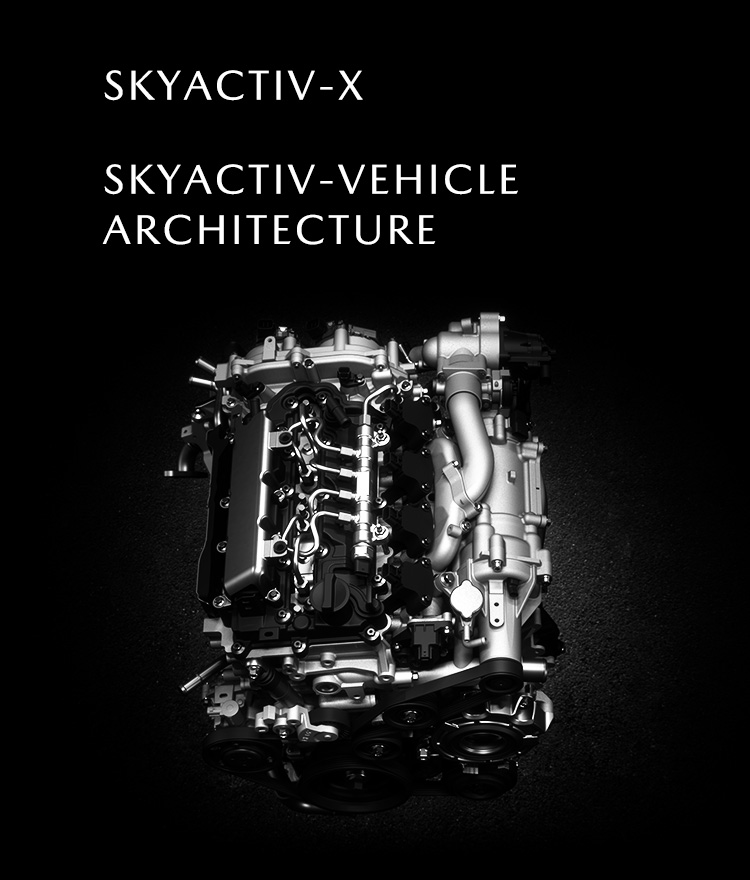
The company has revealed that by 2030 only 20% of its production will be EVs. Up until then it intends to primarily focus on gasoline-powered vehicles.


It is investing hundreds of millions of dollars in its next generation internal combustion engines, which experts say is only like to reap an efficiency benefit of between 1-2%.


Last year Mazda sold a near-record low volume of one million vehicles worldwide! In the first quarter of 2022 Mazda delivered only 200,000 cars worldwide, right after it received a USD$4.2 billion bailout from a consortium of Japanese banks.


Global wholesales slumped by 36% to 166,000 vehicles. Shipments to the USA fell by 37%, whilst shipments to Europe were down by 57% and Chinese sales have fallen 60% this year.


Mazda says it will be forced to hike prices in the USA, to compensate for falling profits. Mazda’s first EV (the MX-30) has been poorly-received, and could be best described as ‘dead in the water’.


Highly respected CAR AND DRIVER says the MX-30’s 100 mile (160km) driving range is ‘laughable’, and is less than half the range of its two major competitors, GM’s Bolt and the Hyundai Kona EV. Needless to say, it’s also no rocket ship off the mark, taking around 9 seconds to reach 60mph.


The magazine says the EV will be joined by a plug-in hybrid version later this year, but many are wondering if the company will still be around in 2023. Its towering losses, falling sales and profit margins, and an uncompetitive first entrant into the EV market a failure, it’s very hard to see this significant carmaker surviving.


JOHN CRAWFORD

Friday, November 18, 2022

DRIVEN PERSONALITIES - ROBIN PAGE by John Crawford

I’m no stranger to styling studios, and despite the roles I’ve held at a number of significant brands, my close friendships with a number of key Heads of Design at a variety of competitor companies has allowed me access to a huge range of new (and top secret) concepts, which were moving from sketchpads, to tape drawings, and then to full size clays.


This is a pretty unusual situation, because normally you never allow a competitor to ‘see into your future’. I am grateful that my integrity, and confidentiality in seeing these ‘secrets in the making’ have been respected sufficiently for me to just chat to designer mates about ‘design stuff’.


After I joined Rolls-Royce & Bentley Motor Cars in 1998 I asked the then Chairman, my good friend, Graham Morris, if someone could take me on a guided tour of the Crewe works. Graham unearthed one of the original factory guides and his running commentary would have filled a history book.


Towards the end of the tour Harry and I walked past a fairly non-descript brick building, which Harry said was the styling studio. I asked if that was included in the tour, to which he replied, “Only if the ‘Guvnor’ approves (meaning the Chairman).”

I said, “Well let’s call him up and get permission.” Harry replied: “No-one just calls up the Chairman matey.” To cut a long story short, I went to the Reception desk, called up Graham Morris, who phoned down to the studio and cleared the way.


Harry was impressed, but put the success down to simply being a brash Aussie. “You blokes get away wiv’ murder over ‘ere. I must say you’ve got a lot of ‘front’ just phoning up Mr. Morris like that.”


We went through a security airlock into the studio to be greeted by the most low-key chief designer I think I have ever met – Graham Hull. He spoke softly, keeping his sentences short.

If you thought you’d pick up some gems in conversation, Graham was not the guy to be talking to.


Pinned to the wall was a sketch featuring a trio of cars designed by Graham.


They represented the forthcoming Bentley Arnage saloon, but hidden in the middle was an original rendering of what morphed into a project called ‘MSB’ – Medium Sized Bentley.


It was also the day I met one of the most inspiring young designers I had ever met, Simon Loasby – who now leads exterior design for Hyundai in Namyang, Korea.


Simon was already working up renderings of ‘MSB’ – and Graham Hull had not been invited to participate in the program.


Simon explained the reason for Graham Hull’s reticence was that since the Volkswagen takeover, VW’s Chief Designer, Hartmut Warkus, had visited the studio, and on his return to Wolfsburg advised Dr. Piëch to ‘clean out the place’ and get a decent design team in there ‘tout suite’!


After Hull’s decision to retire it wasn’t long before a trio of young designers took over the Crewe studio.


Led by one of VW’s bright new talents, Dirk van Braekel, as Head of Design, the team included a Brazilian-Italian, Raul Pires (exteriors), plus a quiet and sophisticated Brit, Robin Page (Interiors).


My first meeting with this team occurred literally the week that Mr. Warkus had approved the first sketches for the concept that was to become the Bentley Continental GT coupe - probably, by now, the most commercially-successful Bentley ever launched.


Despite the overwhelmingly daring nature of Raul Pires’ first exterior sketches, it was the interior designs which really caught my eye.


Robin Page showed that for a young man (at the very start of his, so far, illustrious career in car design), his drawings were sophisticated, unified and original. Yes, there may have been ‘just a taste’ of ‘old’ Bentley to inform Robin’s ideas, but his cohesive design was fresh, new and imposing.


Robin’s design future began at age 12, when his next-door neighbour, a lecturer in Transport Design at Coventry University, asked him what he wanted to do as a career. Robin said, “I like to draw, solve problems and I love cars”.


Robin told me: “He advised me to do an apprenticeship in design engineering, and in the evening extra studies in fine art. So, I applied to Jaguar Cars, which was the best apprenticeship at the time.

I spent the first two of my four years learning all the engineering skills and the last two years spending at least 2 weeks in every department from the shop floor to shadowing the top management teams. In the evenings I studied engineering and fine art.”


“I also worked in exterior body engineering. It was an extremely quick learning curve which gave me great experience for making feasible designs, which would be vital in my future career, and I learned how to fight for my designs.”


“After completing my apprenticeship, I worked for a year for Trevor Laight (at Jaguar) and then left to complete my dream of doing the Transport Design course at Coventry University. I studied from 1992 to 1995 and then immediately got the job at Rolls-Royce and Bentley.”


“On reflection, I did question why I did the apprenticeship in engineering when my fellow students had come from a pure art background.


The reality hit me hard as soon as I started at Rolls-Royce and Bentley - because as soon as you created a piece of design, you are immediately challenged by engineering.


This is where the experience during my apprenticeship was critical. I had the knowledge, experience, and tools to justify the feasibility of my work.” said Robin.


By the time I retired from Bentley Motors North America in 2006, Robin had been busy refreshing the interiors of the coupe, through the Flying Spur saloon, and the Continental convertible.


His next project in 2005 was the new Bentley Mulsanne saloon.


In 2009 I was witness to his work when the Mulsanne made its global debut on the main stage at the Pebble Beach Concours d’Elegance, wowing the crowd.


I continue to maintain regular contact with Dirk van Braekel who always emphasised to me what a great privilege it had been to work with two such inspired young designers like Raul Pires and Robin Page.


In 2011-2012 at the request of VWAG’s Head of Design, Walter de Silva (left), Robin also worked on a Bugatti project designing a future interior concept, then in 2013 Robin accepted a new challenge from Volvo, which wanted to achieve a more premium feel in the interior design of its future concepts.


He led the interior design team in the creation of the award-winning trio of concept cars, and the final creation of the New 90 range, 60 range and new XC40, which have already symbolized a large step forward for a more premium feel.


In 2015, he received the Interior Designer of the Year award as a symbol of his success of his new design work for Volvo. Then in 2017, Robin Page was promoted to Global Head of Volvo design to lead the team, to create the next generation of Volvo cars, and support the Polestar range.


Robin Page (Global Design, Volvo) - Thomas Ingenlath (Global Design, Polestar)

Since that promotion he has introduced the future vision of the full autonomous 360c Concept; model year updates for the full Volvo range; and an introduction of the XC40/C40 full electric car (right).


He has also introduced the Concept Recharge, which is a manifesto for Volvo’s next generation of cars, led by the exciting new Volvo EX90 launched in Sweden this week.


I’m proud to call Robin a good friend, and thrilled I was able to recognise his prodigious talents when we first met at Bentley in Crewe in 2000.


You’ll be hearing a lot more of this talented designer.


JOHN CRAWFORD 

Wednesday, November 16, 2022

THE EX90 - VOLVO'S FULL EV SUV by John Crawford

On October 15 I published two vague, apparently new models from Volvo. The images were lifted from a patent filing, and as I said at the time patent filings are usually short on detail – but now we can expose all the detail behind Volvo’s latest entry into the BEV game.


The new all-electric Volvo EX90 is less of a ‘new car’ and much more like a computer on wheels. Everything you think about when you consider a new model intro is there. It’s a body, wheels, powertrain, brakes, interior with seats and smart new fabrics and materials – but really, in this case it’s what’s driving the new Volvo EV that’s impressive.


Volvo has completely embraced Artificial Intelligence (AI), and this delivers a truly unique (for now) seven-seat crossover-SUV.


Text lifted from the press kit confirms everything I’ve said:


A core system – powered by NVIDIA DRIVE AI platforms Xavier and Orin, Snapdragon® Cockpit Platforms from Qualcomm Technologies and in-house developed software by Volvo engineers – runs most of the core functions inside the car, from safety and infotainment to battery management. The end result is a more responsive and enjoyable experience inside the car.


In other words, your Volvo EX90 won’t be just a new car, it will be a highly advanced computer on wheels. Even better, just like your smartphone or your laptop, the Volvo EX90 is designed to get better over time, thanks to regular over-the-air software updates.


By combining the state-of-the-art computing power from Snapdragon’ Cockpit Platforms with the visualisation capabilities of Unreal Engine, the 3D tool developed by Epic Games and used to power some of the world’s largest games, to give you lightning-fast computing power and high-quality graphics on the in-car screens and head-up display.


I’m guessing DRIVING&LIFE won’t be driving this Volvo any time soon, but really, I don’t expect there to be much difference in the day-to-day experience. If you’ve driven a Tesla, then I forecast the EX90 will go about its business quietly and quickly and all the AI-driven systems will just do their job in the background.


Volvo says the EX90 will go 600km on a full-charge, and it charges from 10-80% in just 30 minutes. Still longer than standing by a gas pump – but impressive nonetheless.


As well, it wouldn’t be a Volvo from Sweden without a nod to sustainability, recycling and intelligent use of resources.


The Volvo EX90 contains approximately 15 per cent of recycled steel, 25 per cent of recycled aluminium, as well as 48 kilograms of recycled plastics and bio-based materials, which corresponds to around 15 per cent of the total plastic used in the car – the highest level of any Volvo car to date.


Additionally, the overall user experience inside the Volvo EX90 is designed on the principle of complexity made simple, avoiding information overload. The displays in the centre stack and in front of the driver provide information in a smart way that can be customised the way you prefer. The Volvo EX90 will also be compatible with wireless Apple CarPlay or Android Auto™.


Inside the Volvo EX90, a 14.5-inch centre screen is the gateway to one of the most advanced infotainment systems on offer, with Google built-in, and 5G connectivity as standard where available.


Finally, with remote actions you can seamlessly move between the car and your home. Just ask Google to lock, warm up or cool down your Volvo EX90 from the comfort of your home. You can also instantly find out your battery charge level.
 

Aside from the restrained and sophisticated exterior, the EX90 introduces the same multi-material approach I talked about recently with the Volvo Recharge project – delivered by my good friend Robin Page – who originally joined Volvo as Head of Interior design, but now he is overall Global Head of Design for Volvo.


He and his team have delivered probably Volvo’s most important new car for decades, and with a commitment to introduce a new EV every year up to 2035 the company lifted itself from its rather obscure image as a ‘safe box on wheels’ to a truly benchmark competitor in the very volatile global EV market.


EVs may only be less than 2.5% of global new cars now, but I believe this Volvo will raise the bar, in terms of technology and driver satisfaction, for the others to follow.


JOHN CRAWFORD


Cut and paste this link to view the corporate video:


https://www.media.volvocars.com/global/en-gb/media/videos/307734/volvo-ex90-reveal-highlights-a-roll


Saturday, November 5, 2022

UN-BOXING & RE-CHARGING VOLVO by John Crawford

When was the last time Volvo attempted to throw off the image of the boxy Swede, with safety more important than driving dynamics and ‘style’?


I think it started when British designer Peter Horbury revealed the S80 sedan in 1998.


That car sprang from Peter’s sketch pad and into the automotive world as a complete break with tradition.


Up until then, we’d taken the boxy, slab-sided 1978 264 and the 1985 740 as the standard Volvo approach to Scandinavian efficiency married to safety.

We couldn’t expect much more from the stiff and dour Swedes – that’s just the way they thought about car design.

So, the Novocastrian, with a degree from London’s Royal College of Art was something of a shock in Gothenburg, in western Sweden, just a skimming stone’s throw across the Kattegat from Denmark.


Horbury broke with Volvo design tradition by attempting a design led by what is called ‘Nosecap’ styling, where the leading edges of the hood and front fenders end just before the grille, and they become part of the ‘front face’ using a nosecap – usually made from composite materials.


I remember this development vividly, because it coincided with my first introduction to the jovial Brit. We were on the Volvo stand at the Geneva Salon talking about design, and we walked alongside the show car when Peter muttered angrily under his breath, “For God’s sake, this is a bloody show car, they could have done better than this!”

The composite nosecap showed about as much stiffness and careful alignment with the sheet steel edges of the hood and fenders as a McDonald’s Big Mac. Peter was not impressed, so we both moved on to the Ford display to meet up with J Mays and talk about something other than nosecap styling.


Of course, the production engineers got much better at matching the composite nosecap to the steel, and the S80 was a breath of fresh air, leading the way to a design ‘freedom’ which Horbury pursued with vigour.


Now, in 2022, we have another talented and sophisticated Brit who is delivering yet another take, also a complete antithesis to boxy Volvos of the past.


Meet my good friend Robin Page, whom I worked with at Bentley Motors, who arrived in Sweden in 2013 to take over the post of Head of Interior Design.


Volvo pretty quickly established that his design skills were eminently suited to whole car styling, and just four years later he was named Head of Volvo Design, and charged with ushering in a dazzling new design for Volvo called, the Concept Recharge.


With the 2021 Concept Recharge, a pure EV, Volvo Cars demonstrates the steps it will take in all areas of pure electric car development to reduce its cars’ and its overall carbon footprint. The company plans to sell only fully electric cars by 2030 and aims to be a climate neutral and circular business by 2040.


By using sustainable materials inside the car, equipping it with tyres from recycled and renewable material, improving aerodynamics and other measures, Volvo Cars can take huge steps to reduce its carbon impact through the car itself.


According to Volvo, with Concept Recharge the company will explore the tension between the need for efficiency and the desire for the same space, convenience and driving experience as in today’s SUVs.


The interior design is rich in sustainable materials, both natural and recycled materials – like responsibly sourced Swedish wool; environmentally responsible textiles, and lightweight composites created from natural sources.


Responsibly sourced Swedish wool is transformed into fully natural breathable cloth, free from additives. This warm and soft material is used in the seat backrest and instrument panel top.

The seat backs and headrests, as well as part of the steering wheel, use a new material created by Volvo Cars called Nordico. It is a soft material made from bio-based and recycled ingredients that come from sustainable forests in Sweden and Finland, providing a CO2footprint that is 74 per cent lower than leather.


Elsewhere in the interior, including in the lower storage areas, back of the headrest and the footrest, the Concept Recharge uses a flax composite, developed by Volvo Cars in collaboration with suppliers. It uses fibres from the linseed plant, which are mixed with composites to provide a strong and lightweight, yet attractive and natural aesthetic.


On the exterior, the front and rear bumpers as well as the sill moldings also consist of flax composite. Using a flax composite both inside and out in this way results in a significant reduction of plastics used.

However, aside from all these lofty environmental aspirations, it is the styling, the design DNA, which I find most stimulating. I don’t want to insert myself here as a design critic, but rather present the images, which I believe say a great deal about Volvo design under Robin Page.


Robin Page (extreme right) with the design team

Obviously the Concept Recharge is just that, a concept. However, it informs how the company will move beyond the current range of cars, with a new EV version of its well known XC90 next off the launching pad.

Given the commercial success of the XC-40, I believe Volvo, backed by Geely's confidence in the brand's future, is poised to take a much bigger market share, as it sheds its boxy past, for a future defined by more subtle and sophisticated envelopes for the environmentally-friendly mix of materials, truly practical interior design features, and a low carbon footprint.

So Volvo is swapping its safety focus, for svelte design, courtesy of another Brit with a history of stylish lines. That's a good thing.


JOHN CRAWFORD